The Ring of Worlds Universe
The Ring of Worlds is more than a connected main series. It is a larger science fantasy universe of ancient magic, interdimensional danger, lost histories, strange worlds, invented language, found family, queer devotion, and cosmic consequences.
The main novels follow the central Ring of Worlds storyline and are best read in order, beginning with Reunion of the Three. This page gathers the extra pieces of the universe around that story: maps, glossary entries, language resources, background lore, and reader extras that deepen the world without requiring a doctorate in fictional archaeology.
Explore carefully. Some paths contain spoilers. Others contain pronunciation notes, because apparently I enjoy creating words that look like they were summoned during a thunderstorm.
World Maps
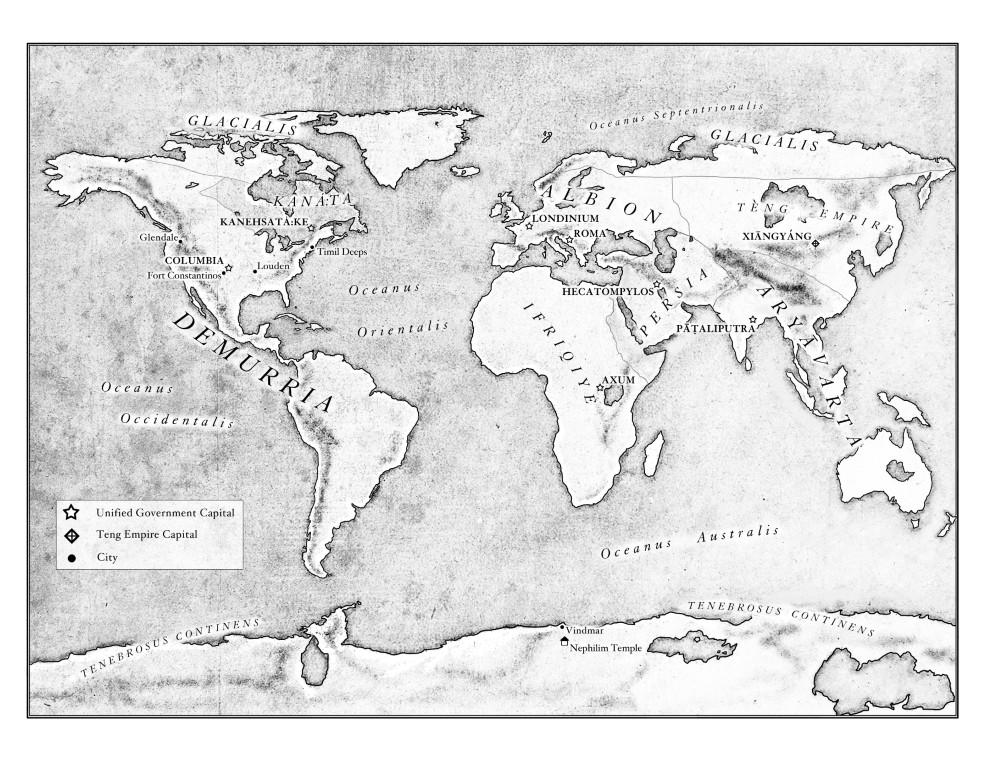
Gaea
Explore Gaea, the homeworld where The Ring of Worlds begins. This map offers a visual guide to the lands, cities, cultures, and places that shape the early story of Alexander, Imara, Sirenī, and the world that first feared what the Three could become.
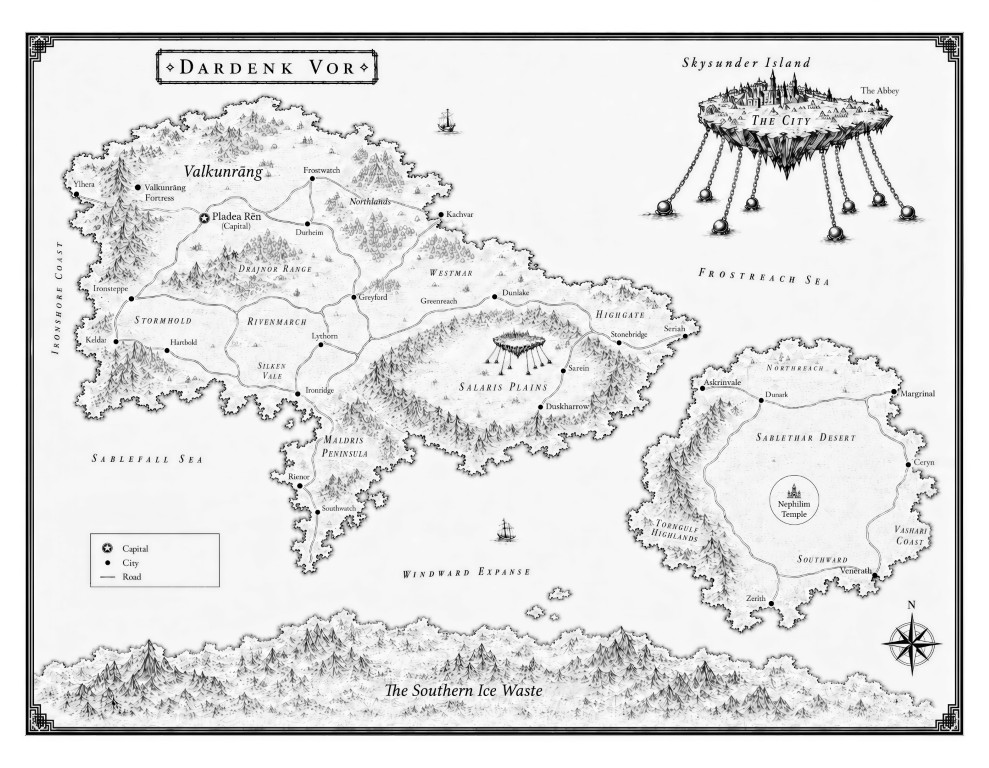
Dardenk Vor
Discover Dardenk Vor, an industrial world of vast continents, floating skylands, ancient secrets, and impossible histories. From Valkunrāng to Skysunder Island and the hidden mysteries beyond, this map gives readers a glimpse of one of the worlds waiting deeper in the Ring.
Ôrëńos Conlang
Ôrëńos is a fully developed, functional constructed language created with Joseph W. Windsor for The Ring of Worlds. It is not just decorative fantasy flavor; it has its own sound system, grammar, vocabulary, diacritics, and internal logic, and it appears throughout the series in names, terms, cultural references, and language notes.
For readers, writers, linguistics enthusiasts, and conlang fans who enjoy seeing how an invented language works beneath the surface of a fictional universe, the Ôrëńos-English Dictionary offers a deeper look at the structure and vocabulary behind the words used in the books.
Grab the most recent copy of the dictionary here: Ôrëńos-English PDF
The Glossary
The Ring of Worlds glossary is a growing guide to the names, terms, worlds, species, magic, languages, and cultural references that appear throughout the series. Use it when you want a quick reminder, a pronunciation clue, or a deeper look at the details woven through the books.
All terms are in Demurrian Latin except where otherwise noted.
Adamma — /ʌ.ˈdæ.mʌ/ (uh-DAM-uh) [Αδάμμα] Ancient Greek
A surname.
Adrienne Vorpahl — /ˈæd.ri.ən ˈvɔr.pɑl/ (AD-ree-en VOR-pal)
A female name.
Aeronwen — /aɪ.ˈrɔn.wɛn/ (eye-RON-wen) Cymraeg
A female name.
ʻAfārīt — /ʕa.ˈfaː.riːt/ (ah-fah-REET) [عفاريت] Arāmāyā
A supernatural spirit or demon in Islamic mythology.
Plural: ʻifrīt — /ʕif.ˈriːt/ (eef-REET) [عفريت].
Āiláo Quán — /ái.láu tɕʰy̌ɛ́n/ (eye-LAO chyehn) [哀牢泉] Tèngyīn
An ancient place in the Tèng Empire.
Ak’wah yukwaiá’das — /ə.ˈkʼwə ju.ˈkwəi̯.áʔ.ˈdəs/ (h-KWAH yoo-KWY-ah DAHSS) Onondaga
“My heart’s son.”
Ākāśa — /aː.ˈkaː.ʃə/ (ah-KAH-shuh) [आकाश] Saṃskṛta
Aether, sky, space, spirit, or vacuum. It is used in Buddhist, Hindu, and Jain philosophy to describe the space or medium in which all things exist.
Amanuensis — /ə.ˌmæn.ju.ˈɛn.sɪs/ (uh-man-yoo-EN-sis)
A secretary, scribe, or assistant.
Plural: amanuenses — /ə.ˌmæn.ju.ˈɛn.siːz/ (uh-man-yoo-EN-seez).
Amaterasu — /a.ma.te.ˈɾa.su/ (ah-mah-teh-RAH-soo) [天照] Japanese
A female name.
Amlodd — /ˈam.ɬɔð/ (AM-loth) Cymraeg
A male name.
Amṛta — /əm.ˈɽi.tə/ (uhm-RIH-tuh) [अमृत] Saṃskṛta
The nectar of immortality. Alexander Eldred describes it as a hypnotically swirling, amber-colored mass.
Anar — /ˈʔan.ˤaːr/ (AHN-ahr) [رمان] Arāmāyā
A male name.
Andrej — /ˈan.drʲej/ (AHN-dryey) [Андрей] Slavic
A male name.
Anēsin Hektonvisk — /ʌ.ˈni.sɪn hɛk.ˈtɑn.vɪsk/ (uh-NEE-sin hek-TAHN-visk) Ôrëńos
Enchantment. Literally, Stillness’s Web, but colloquially, when translated into Demurrian Latin, it’s called the Web of Stillness.
Annulus — /ˈan.nu.lus/ (AN-nuh-loos)
Ring or circle.
Plural: annuli — /ˈan.nu.li/ (AN-nuh-lee).
Arāmāyā — /ˈʔar.aː.maː.jaː/ (AR-ah-mah-yah) [آرامية]
The Aramaic language.
Ásbrú — /ˈau̯s.bruː/ (OWS-broo) [ᛅᛋᛒᚱᚢ] Old Norse
Æsir’s Bridge or Bridge of the Gods. The rainbow bridge that connects Asgard to Midgard, the Bifröst — /ˈbɪv.røst/ (BEEV-rerst) [ᛒᛁᚠᚱᛟᛋᛏ].
Ašmədʾāy — /ʔaʃ.ˈmədʔ.aj/ (ash-MUHD-uh-y) [أشمدياي] Arāmāyā
A powerful jinn (demon). In Islamic, Jewish, and Christian mythology, he tempts humans into sin and is associated with sensual pleasures, particularly sexual lust.
Assttrizzus — /ˈæs̠.t͡s͡tɹɪ.z̠ʊs̠/ (ASS-t-TRIZ-uss) Ssalltyggian
A male name.
Auditum Peritiae Arcanae — /ˈau̯.di.tum pe.ri.ˈti.e aɾ.ˈka.nae/ (OW-dee-toom peh-rih-TEE-eh ahr-KAH-nay)
The Arcane Proficiency Audit. There are two versions of the assessment: one to grade magically gifted children to help determine their schooling curriculum, and a more intense audit to assess a prospective member of the Concilium Magorum (Council of Wizards).
Ban Sith — /bˠan̪ˠ ʃɪh/ (bahn-shee) Celtic
Woman of the fairy mound. It refers to a female spirit or fairy who calls the names of the dying. The male form is fear sith — /fʲar ʃɪh/ (far-shee).
Bhāṣājñamantra — /bʱaː.ˈʂaː.ɟɲa.ˈmaɳ.ʈra/ (bhaa-SHAA-gya-MUN-tra) [भाषाज्ञमन्त्र] Saṃskṛta.
Enchantment. The Spell of Languages.
Bibliotheca Columbia — /bi.bli.o.ˈthe.ka ko.ˈlum.bi.a/ (bee-blee-oh-THEH-kah koh-LOOM-bee-ah)
The public library in Columbia, in central Demurria.
Bohuslava — /ˈbo.hu.slɑː.vɑ/ (BO-hoo-SLAH-vah) Slavic
A female name.
Boötes — /boʊ.ˈoʊ.tiz/ (boh-OH-tiz) Latinization of the Greek, Boōtēs
A constellation. The Boötes Supervoid is a region of space that is located in the direction of the constellation. It has an unusually low density of galaxies and other matter. The Boötes Supervoid is one of the largest known, measuring about 330 million light-years across.
Byrne — /bɜrn/ (burn) Celtic
This is a planet in the Ring of Worlds. Derived from Ó Broin — /oː ˈbɾˠoːnʲ/ (oh BRO-in).
Byssus — /'bys.sʊs/ (BISS-oos)
Fine linen or fabric.
Cakraṃ — /tʃə.ˈkram/ (CHUH-kruhm) [चक्रं] Saṃskṛta
Wheel or disc. The cakra (plural of cakraṃ) are the seven primary energy centers in the human subtle body. They are located along the spine at the perineum behind the vaginal opening or testicles; two inches below the navel; below the diaphragm at the solar plexus; center of the chest; center of the throat; just above and between the eyebrows; and at the crown of the skull.
Calamitas — /kä.'lä.mɪ.täs/ (kah-LAH-mi-tahs)
Calamity or disaster. On Gaea, it is a magical board game for two or three groups of players. It teaches magicians strategy, tactics, critical reasoning, and how to fight in three-dimensional environments since it involves air, land, and sea elements.
Cambion — /ˈkæm.bi.ən/ (KAM-bee-uhn)
A half-demon hybrid.
Castonguay — /kas.ˈtɔ̃.ɡɥe — / (kah-STAWN-gweh) French
A surname.
Catanach — /'kʰat̪.ə.nəx/ (KHAT-uh-nuhkh) Celtic
A surname.
Cathedra — /kə.ˈθiː.drə/ (kuh-THEE-druh)
Chair, seat, or throne.
Plural: cathedrae — /kə.ˈθiː.dreɪ/ (kuh-THEE-dray).
Cernunnos — /kɛr.ˈnʊ.noʊs/ (ker-NOO-nohs) Celtic.
A male name.
Cervantes — /θer.ˈβan.tes/ (ther-BAHN-tes) Spanish
A surname.
Chāhak — /tʃɒː.ˈhæk/ (chah-HAK) [چاهک] Persian
One of several villages in Iran known for producing Damascus steel during the medieval period, which lasted from approximately the 8th to the 16th century. Damascus steel was made using a unique process that involved forging together different types of steel at high temperatures and then repeatedly folding and twisting the material. The resulting steel was then shaped into various weapons, including swords, daggers, and knives. The production of Damascus steel was a closely guarded secret, and the techniques used to create it were lost after the 18th century. Modern metallurgists are still trying to recreate the process used to make Damascus steel. It was the birthplace of the archlīc Dilșad.
Chèuhngsāam — /t͡ʃʰ.ɔːŋ˥.ˈsɑːm˥/ (chawng-SAHM) [長衫] Tèngyīn
A long shirt or gown.
Chogūndapāta — /tʃo.ɡuːn.də.ˈpaː.tə/ (choh-goon-duh-PAH-tuh) [चोगूण्डपात] Vihdarthan.
A name.
Ciarán — /ˈkiər.ɔːn/ (KEER-awn) Celtic
A male name.
Clíodhna — /ˈklʲiː.nʲ.a/ (KLEE-uh-na) Celtic
A female name.
Colonia Constantinum — /ko.ˈlo.ni.a kon.stan.ˈti.nʊm/ (koh-LOH-nee-ah kon-stan-TEE-num)
A group of volcanic islands off the western coast of Demurria.
Concilium Magorum — /kɔn.ˈki.li.um ma.ˈɡo.rum/ (kon-KEE-lee-um ma-GO-rum)
The Council of Wizards. There are thirteen members, each marked with a hidden glyph that they can reveal to others. It glows on their palms when they show it, and obedience to their whims is absolute. They meet in the Conciliar — /conˈkɪ.li.ar/ (kon-KIL-ee-ar) Hall.
Congregans Sol — /kɔŋ.ˈgre.gans sɔl/ (kon-GREH-gahns sohl)
Enchantment. The Gathering Sun.
Conservare Semper — /kɔn.sɛr.ˈwɑːr.ɛ ˈsɛm.pɛr/ (kawn-sair-wahr-ay sem-pair)
Enchantment. A preservation spell.
Consiliarius — /kɔn.si.ˈli.a.rjus/ (kawn-see-LEE-ah-ree-oos)
Councilmember of the Wizard’s Council.
Plural: Consiliarii — /kɔn.si.ˈli.a.ri.i/ (kawn-see-LEE-ah-ree-ee).
Curia Magorum — /ˈkʊ.ri.a ma.ˈɡo.rum/ (KOO-ree-ah mah-GO-rum)
Curia were meeting places for the Senate in ancient Rome, and this is where the thirteen members of the Council of Wizards meet.
Custodia Scripti — /kusˈtoː.di.a ˈskrip.ti/ (koos-TOH-dee-ah SKRIP-tee)
Enchantment. Guarding of the Writing.
Cymraeg — /kəm.ˈraɪɡ/ (kuhm-RYE-g)
The language spoken on Omejis.
Darhavil — /dar.ˈha.vɪl/ (dar-HA-vill) Etymology unknown
The language of the Nephilim from the Dawntime civilization. Artifacts and knowledge survive from that era on Gaea, but it’s mostly conjecture, legend, and myth.
Darhavilon — /dar.ha.vɪ.ˈlon/ (dar-ha-vih-LON) Etymology unknown
The Dawntime and its associated civilization. It denotes an ancient epoch from which all humans descend. The origins of humankind and its distant history are lost to myth and legend, though some artifacts remain on Gaea and around the Ring of Worlds.
Dendrokrates — /ˌdɛn.droʊ.ˈkreɪ.tiz/ (DEN-droh-KRAY-teez) [Δενδροκράτης] Ancient Greek
Male tree spirits.
Plural: dendrokratoi — /ˌdɛn.droʊ.ˈkreɪ.tɔɪ/ (DEN-droh-KRAY-toy) [Δενδροκρατοί].
The comparable female form is dryad — /ˈdraɪ.æd/ (DRY-ad) [Δρυάς].
Plural: dryades — /dɹaɪ.ˈeɪ.diːz/ (dry-AY-deez) [Δρυάδες].
Dezhnyov — /ˈdʲeʐ.nʲɵf/ (D'YEZH-nyov) [Дежнёв] Slavic
A surname.
Dies — /ˈdi.es/ (DEE-es)
Day. The Romans originally used an eight-day week with each day named after the planets. They switched to a seven-day system with each day named after the gods. They had a fiendishly complex calendar. On Gaea, the calendrical system hailed from Atülän until the Council of Wizards established the Doctrine of Unity.
-
Dies Solis — /ˈdi.es ˈso.lis/ (DEE-es SOH-lis) The Day of the Sun. Sunday.
-
Dies Lunae — /ˈdi.es ˈlu.nae̯/ (DEE-es LOO-nah-ee) The Day of the Moon. Monday.
-
Dies Martis — /ˈdi.es ˈmar.tis/ (DEE-es MAR-tis) The Day of Mars. Tuesday.
-
Dies Mercurii — /ˈdi.es mɛr.ˈku.ri.i/ (DEE-es mer-KYOO-ree-ee) The Day of Mercury. Wednesday.
-
Dies Iovis — /ˈdi.es ˈjo.wis/ (DEE-es YO-wis) The Day of Jupiter. Thursday.
-
Dies Veneris — /ˈdi.es ve.ˈne.ris/ (DEE-es veh-NEH-ris) The Day of Venus. Friday.
-
Dies Saturni — /ˈdi.es sa.ˈtur.ni/ (DEE-es sah-TOOR-nee) The Day of Saturn. Saturday.
Dilșad — /dil.ˈʃad/ (dil-SHAHD) [دلشاد] Persian
A Kurdish male name in the Kurmanji dialect.
Discipulus Impertinens — /dɪ.ˈskɪ.pu.lʊs ɪm.pɛr.ˈti.nɛns/ (di-SKIH-pu-lus im-pair-TIH-nens) Latin
“Impertinent student.”
Doctrina Unitatis — /dok.ˈtri.na u.ni.ˈta.tis/ (dok-TREE-nah oo-nee-TAH-tis)
Doctrine of Unity. This serves as the foundation for the Unified Government established by the Council of Wizards.
Draugr — /ˈdrɑu.ɡr/ (DROW-gər) [ᛞᚱᚨᚢᚷᚱ] Old Norse
A type of zombie or walking corpse animated by intense passion and a dangerous intelligence.
Plural: draugar — /ˈdrɑu.ɡɑr/ (DROW-gahr) [ᛞᚱᚨᚢᚷᚨᚱ].
Drëndi — /ˈdɹɛn.di/ (DREHN-dee) Scandinavian
A female name.
Dwynwen — /dʊɪn.ˈwɛn/ (duin-WEN) Cymraeg
A female name.
Ednyfed — /ɛd.ˈnə.vɛd/ (ehd-NUH-vehd) Cymraeg
The supercontinent girdling the equator of the panthalassic world, Omejis.
Eirianedd — /ˌɛɪ.ri.a.ˈnɛð/ (ay-ree-ah-NETH) Cymraeg
A female name.
Eisheth Zenunim — /eɪ.ˈʃɛθ zɛ.ˈnuː.nɪm/ (ay-SHETH ze-NOO-neem) [אֵישֶׁת זְנוּנִים] Hebrew
It’s from the Kabbalah mythology and names a female demon associated with prostitution or fornication. According to non-Kabbalistic sources, she was a powerful earlier female figure reclassified as a whore in later androcentric religious mythologies.
Ělîšeḇa — /ʔɛ.li.ʃɛ.ˈvaʕ/ (el-ee-sheh-VAH) [אֱלִישֶׁבַע) Hebrew
A female name.
Epiphania Lucis — /e.pi.ˈfaː.ni.a ˈluː.kis/ (eh-pee-FAH-nee-ah LOO-kis)
Enchantment. The Epiphany of Light.
Et Alas Mercurii — /ɛt ˈa.las mɛr.ˈku.ri.i/ (et AH-las mer-KOO-ree-ee)
Enchantment. A spell of swift travel.
Europe — /eu̯.rɔ́ː.pɛ̌ː/ (eh-oo-ROH-pay) [Εὐρώπη] Ancient Greek
A female name.
Exscindo — /eks.ˈskɪn.doʊ/ (eks-SKIN-doh)
Enchantment. To cut or excise. Alexander uses it to cast destruction spells.
Eye of Diabállō — /dia.ˈbál.loː/ (dee-ah-BAHL-loh)
Enchantment. A scrying spell.
Fascinatio — /fas.kiˈnaː.ti.o/ (fahs-kee-NAH-tee-oh)
Enchantment. Charm or glamour spell.
Fāṭimah — /fɑː.ˈtɪ.mɑː/ (fah-TEE-mah) [ܦܵܛܝܡܵܐ] Arāmāyā
A female name.
Gaḇrīʾēlā — /ɡav.riː.ʔeː.laː/ (gav-ree-AY-lah) [גַּבְרִיאֵלָה] Hebrew
A female name. “God is my strength.”
Gaea — /ˈɡaɪ.ə/ (GAI-uh) (Γαῖα) Ancient Greek
A planet.
Galaxías — /ɡá.lak.ˈsi.as/ (gah-lahk-SEE-ahs) [Γάλαξίας] Ancient Greek.
The Milky Way galaxy.
Ghūl — /ɣuːl/ (ghool) [غول] Arabic
An Undying species.
Gladius — /ˈɡlad.i.ʊs/ (GLAD-ee-uhs)
A sword, specifically the short sword used by Roman soldiers in close combat.
Plural: gladii — /ˈɡla.di.i/ (GLAH-dee-ee).
Gradus — /ˈɡra.dʊs/ (GRAH-duhs)
The Grading system applied to quantify a child’s magical capabilities, ranked from one to seven. Consiliarius of the Council of Wizards rank themselves from First Order to Tenth Order using the Dawntime system.
-
Primus Gradus — /ˈpriː.mʊs ˈɡra.dʊs/ (PREE-moos GRAH-duhs).
-
Secundus Gradus — /sɛ.ˈkʊn.dʊs ˈɡra.dʊs/ (seh-KOON-doos GRAH-duhs.
-
Tertius Gradus — /ˈtɛr.ti.ʊs ˈɡra.dʊs/ (TER-tee-oos GRAH-duhs).
-
Quartus Gradus — /ˈkwɑː.tʊs ˈɡra.dʊs/ (KWAR-toos GRAH-duhs).
-
Quintus Gradus — /ˈkwɪn.tʊs ˈɡra.dʊs/ (KWIN-toos GRAH-duhs).
-
Sextus Gradus — /ˈsɛks.tʊs ˈɡra.dʊs/ (SEKS-toos GRAH-duhs).
-
Septimus Gradus — /ˈsep.tɪ.mʊs ˈɡra.dʊs/ (SEP-ti-muhs GRAH-duhs).
Grammaticus — /ɡram.ˈmaː.ti.kus/ (grahm-MAH-tee-koos)
A scholar or teacher of games, but Renya uses it sarcastically to mean a nerd.
Grummore — /ˈɡrɪm.mɔr/ (GRIM-more) Cymraeg
A male name.
Guānyīn — /ɡwænˈjɪn/ (gwan-YIN) [觀音] Tèngyīn
A female name.
Gubernatio Unita — /gu.ber.ˈna.ti.o u.ˈni.ta/ (goo-ber-NAH-tee-oh oo-NEE-tah)
The Unified Government, the administrative body for all of Gaea except for the Tèng Empire (whose capital is included below for completeness), and Tenebrosus Continens, which is largely unoccupied. The regions and their capitals are:
-
Albion — /ˈæl.bi.ən/ (AL-bee-uhn)
-
Capitals:
-
Londinium — /lɒn.ˈdɪn.i.əm/ (lon-DIN-ee-uhm)
-
Roma — /ˈroː.ma/ (ROH-mah)
-
-
Āryāvarta — /aː.rjaː.ˈvər.t̪ə/ (ah-ryah-VAHR-tuh) [आर्यावर्त] Saṃskṛta
-
Capital: Pāṭaliputra — /ˈpɑː.tə.lɪ.puː.trə/ (PAH-tuh-li-poo-tra) [पाटलिपुत्र]
-
-
Demurria — /de.ˈmur.ri.a/ (deh-MUHR-ree-ah)
-
Capital: Columbia — /ko.ˈlum.bi.a/ (koh-LOOM-bee-ah)
-
-
Glacialis — /ɡla.ki.ˈa.lis/ (gla-kee-AH-lis)
-
Capital: Kanehsatà:ke — /kɑ.nɛh.sɑ.ˈtɑː.kɛ/ (kah-neh-sah-TAH-keh)
-
-
Ifriqiye — /ˈiː.fɾiː.ɢi.je/ (EE-free-gee-yeh) [ایفریقیه] Arāmāyā
-
Capital: Axum — /ˈæk.sʊm/ (AK-sum) Latin, but the original term is Ethiopian and written in Ge’ez
-
-
Persia — /ˈpɜːrʃə/ (PUR-sha) [پارس] Latin from Pārs
-
Capital: Hekatompylos — /he.kə.ˈtɒm.paɪ.lɒs/ (heh-ka-TOM-pie-los) [Ἑκατόμπυλος]. Ancient Greek
-
-
Tenebrosus Continens — /ˈtɛ.nɛ.brɔ.sus kɔn.ˈti.nɛns/ (TEN-eh-BROH-sus kon-TI-nens)
-
It has no capital and only one small city, Vindmar, on the coast near the Nephilim Temple.
-
-
Tèng Empire — /tʰə̌ŋ/ (tuhng) [騰] Tèngyīn
-
Capital: Xiāngyáng — /ɕi̯.ɑ́ŋ.jɑ́ŋ/ (shee-AHNG-yahng) [襄阳]
-
Guṇa — /ˈɡu.nə/ (GOO-nuh) [गुण] Saṃskṛta
Attribute, characteristic, quality, or virtue, among other things. The guṇa serves as the fundamental substrate from which matter formulates by “programming” prāṇa to create material structures.
Hal-’êl Abtahi — /χal.ʔeː.ˈl æb.ˈtɑː.hiː/ (khahl-ay-EL ab-TAH-hee) [הלעל אבטחי] Hebrew
A male name.
Hanc saltationem habere licet — /hank sal.ta.ˈti.o.nem ha.ˈbe.re ˈli.ket/ (hahnk sahl-tah-TEE-o-nem hah-BEH-reh LEE-ket) Latin
“May I have this dance?”
Hāvakaṃ — /ˈhaː.və.kəm/ (HAH-vuh-kuhm) [हावकं] Saṃskṛta
Summoner or summoning.
Plural: hāvaka — /haː.və.kə/ (HAH-vuh-kuh) [हावका].
Hayonhwathahonte “Galen” Ohahakehte — /hɑ.ˈjɔn.hwɑ.θɑ.ˈhɔn.te oʊ.ˈhɑː.hɑː.keɪ.teɪ/ (hay-ON-wah-tha-HON-the oh-HA-ha-kay-tay) Kanien’kehá:ka
A male name.
Hélène — /e.ˈlɛn kas.ˈtɔ̃.ɡɥe — / (ay-LEN) French
A female name.
Heōsphoros — /he.ɔːs.pʰo.ros/ (hee-AWS-foh-ros) [Ἑωσφόρος] Ancient Greek
A male name.
Homunculus — /ho.ˈmun.ku.lus/ (hoh-MOON-koo-loos)
Little man or miniature human being. They are magical constructs, twelve inches tall, that have a vestige of the sorcerer who created them.
Plural: homunculi — /ho.ˈmun.ku.li/ (hoh-MOON-koo-lee).
Hrdlička — /hrd.ˈlit͡ʂ.ka/ (hrrd-LEETCH-kah) Slavic
A surname.
Imara — /i.ˈma.ra/ (ee-MAH-rah) Swahili
A female name.
Inanna — /i.ˈnan.na/ (ee-NAHN-nah) Mesopotamian
A female name. A surname in Imara Inanna’s matrilineal line.
Incantamentum Affixionis — /ɪŋ.kæn.tə.ˈmɛn.tʊm æ.fɪk.ˈsiː.oʊ.nɪs/ (in-KAN-tuh-men-tuhm uh-fik-SEE-oh-nis)
Enchantment. Spell of Affixation.
Incantatio Dominationis — /ɪŋ.kãn̪.ˈtaː.ti.oː d̪ɔ.mɪ.naː.ˈt̪i.oː.nɪs/ (in-kahn-TAH-tee-oh daw-mee-nah-TEE-oh-niss)
Enchantment. The Spell of Domination. It produces compulsion.
Incantationem de Restitutio — /ɪn.kan.ta.ˈt͡si.oː.nem dɛ rɛs.ti.ˈtu.ti.oː/ (in-kahn-tah-TSEE-oh-nem deh reh-stee-TOO-tee-oh)
Enchantment. A spell of repair.
Infinitas Gratiae — /ɪn.fɪ.ˈni.tas ɡra.ˈti.eɪ/ (in-fi-NEE-tuhs grah-TEE-ey)
Symbol. Infinite Grace. In mysticism, it is represented by an eight-pointed star and spiral within a squared circle.
Iskariótés — /is.ka.rj.ˈó.tes/ (ees-kah-ree-OH-tes) [Ισκαριώτης] Greek
A surname.
Īśkhaḍgaṃ — /ˈiː.ʃkʰəɖ.ɡə/ (EESH-khuhd-gum) [ईश्खड्गं] Saṃskṛta
On Gaea, these implements are called spirit knives or vampire knives because of their ability to paralyze people and drain prāṇa via even a small wound.
Plural: īśkhaḍga — /ˈiː.ʃkʰəɖ.ɡə/ (EESH-khuhd-guh) [ईश्खड़गा].
Iugis Debitor — /ˈjuː.ɡɪs ˈdɛb.ɪ.tɔːr/ (YOO-gis DEB-ih-tor)
A coin denoting a debt. In this case, an eternal one that can never be repaid.
Iztlacoatl — /ist.͡ɬa.ˈkoː.aː.t͡ɬ/ (ees-tla-KOH-ah-tl) Nahuatl
A male name. Iztli means obsidian. Coatl means serpent.
Kaijū — /ka.i.ˈd͡ʑɯː/ (kah-ee-JOO) [怪獣] Japanese
A monster or giant beast.
Kalypto Hesykhia — /ka.'lip.to he.'sy.kʰi.a/ (kah-LEEP-toh heh-SY-khee-uh) [Καλύπτω Ἡσυχία] Greek
Enchantment. Blanket of Silence.
Kāmla — /'kaːm.laː/ (KAHM-lah) [कामला] Saṃskṛta
A female name.
Kanien'keháka — /kɑ.ni.ɛnʔ.kɛ.ˈhɑː.kɑ/ (kah-nee-ehn-keh-HAH-kah) Kanien’kehá:ka
People of the Place of Flint.
Karkheh Dam — /ˈkɑr.keɪ/ (kar-khey) [سد کرخه] Persian
A large dam in Iran.
Kathreftis tou Narkissou — /'kaθ.ref.tis tu nar.'kis.su/ (KAH-threhf-tis too nahr-KEES-soo) [Καθρεφτής Του Ναρκισσού] Ancient Greek
Enchantment. The Mirror of Narcissus.
Khere-Ohe — /ˈxɛ.rɛ ˈoː.hɛ/ (KHEH-reh OH-heh) Ancient Egyptian
Part of modern-day Cairo, better known in the West by its Ancient Greek name: Heliopolis — /hɛː.li.ˈoú.po.lis/ (hay-lee-OO-po-lis) [Ἡλιούπολις].
Kkerynth — /kɛr.ɪnθ/ (KER-inth) Ssalltyggian
A mythical female name. It is also the name of the Ssalltyggian primary.
Konstantinos Porphyrogennetos — /kon.stan.ˈdi.nos por.fi.ro.ˈʝen.ni.tos/ (kahn-stahn-DEE-nos pohr-fee-roh-YEH-nee-tos) [Κωνσταντίνος Πορφυρογέννητος] Ancient Greek
He was the last emperor of the Roman Empire on Gaea before the Council of Wizards established the Doctrine of Unity and the Unified Government. He ruled from 930 to 1010 of the common era.
Krasnaya Gorka — /ˈkras.nə.jə ˈɡor.kə/ (KRAHS-nah-yah GOR-kah) [Кра́сная го́рка] Slavic
A small town in Russia. The name translates to “beautiful hill.”
Krasnoluki — /ˌkras.nɔ.ˈlu.ki/ (krahss-no-LOO-kee) [Краснолу́ки] Slavic
A small town in Belarus, located about five miles from Krasnaya Gorka in Russia. The name means “beautiful meadows.”
Kṛtyā Bījā — /kɽ̩t̪.'jaː biː.'d͡ʒaː/ (kruht-YAA bee-JAA) [कृत्या बीजा] Saṃskṛta
A seed of action or cause of action.
Kūh-e Sāyeh-Marg — /kuːh e sɒː.je mɑɾɡ/ (kooh-eh SAH-yeh marg) [کوه سایهمرگ] Persian
An ominous mountain on the northern edge of the Rig-e Jenn. The name means “Mountain of Death-Shadow.”
Lauremanda — /lɔː.raɪ.ˈman.da/ (LOR-rye-man-da) Cymraeg
One of the Bitter Islands on Omejis. The name means “the love of Laurentum.”
Leif — /leɪf/ (LAYF) [ᛚᛁᚠᚱ] Old Norse
A male name.
Lethargum Cantatio — /lɛ.ˈtʰar.ɡum kan.ˈtaː.ti.oː/ (leh-TAHR-gum kan-TAH-tee-oh)
Enchantment. The Song of Lethargy.
Lex Parsimoniae — /leks par.ˈsɪ.mɔ.ni.ae̯/ (LEKS par-SI-moh-nee-eye)
The law of simplicity. It is associated with Occam’s razor, which states that when presented with competing hypotheses, one should select the solution with the fewest assumptions. The idea was first proposed by Gulielmus Occamus — /gu.ˈli.el.mus ˈɔk.ka.mus/ (goo-lee-EL-moos AWK-ka-moos) William of Ockham.
Li Bìmìng — /li pi⁴¹.miŋ⁴¹/ (lee bee-ming) [李必明] Tèngyīn
A male name.
Liáng Bo — /lǐ.ǎŋ pwǒ/ (lee-ahng bwaw) [梁波] Tèngyīn
A male name.
Līc — /lik/ (leek) Old English
The literal meaning is "corpse" or "body". On Gaea, they’re necromancers who reanimate corpses (animate forms, or colloquially “skins”) and occupy them with magic while keeping their souls hidden in a remote location. They tend to be hard to kill, even if their bodies are easy to destroy. There are weaker variations called demilīc and much more powerful versions called archlīc. The term has two common, alternate pronunciations: /lɪtʃ/ (litch) and /laɪk/ (like).
Līvyāṯān — /liː.vjaː.'θaːn/ (lee-vyah-THAHN) [לִוְיָתָן] Hebrew
The Leviathan is a sea monster mentioned in Hebrew mythology.
Locrunite — /ˈloʊ.kruː.naɪt/ (LOH-kroo-nyte)
Locrunite is an exotic crystalline material made up of carbon cage structures that look like enlarged fullerene lattices. Each unit consists of a C₉₀ carbon cage stabilized around sixty evenly spaced exotic nuclei that sit at resonance nodes within the lattice. The carbon framework gives mechanical stability, thermal resilience, and electromagnetic shielding, while the embedded nuclei act as quantum anchors that interact with deeper scalar properties of spacetime. This crystal forms a metastable quantum-coherent lattice that can couple to a background scalar field present throughout space. This interaction allows locrunite to serve as both a quantum information stabilizer and an energy transducer that operates beyond conventional electromagnetic physics.
Through this scalar coupling, locrunite interacts directly with the prāṇamaṇḍala, the underlying coherence field that governs informational order in matter and energy. The exotic nuclei within the lattice resonate with this field, generating stable prāṇa harmonics that prevent energetic distortion and preserve coherent quantum states. In its common crystalline form, locrunite can be manufactured as a lattice embedded within other structural materials such as diamond to create highly stable computational substrates. When present in a sufficient quantity, this resonance can anchor persistent informational structures, enabling advanced systems or intelligences to maintain coherence independent of their original physical hardware. A rarer form, monatomic locrunite, consists of isolated resonance nuclei that maintain self-contained scalar coherence fields capable of stabilizing prāṇa interactions in surrounding matter.
The scalar interaction responsible for locrunite’s prāṇa resonance can be expressed in simplified form as a coupling between the crystal’s exotic nuclei and the background scalar coherence field of the prāṇamaṇḍala. The coherent energy density generated by a locrunite lattice may be approximated as:
E_{pr\bar{a}na} = \lambda \Phi_s
where represents the coherent prāṇa energy sustained within the lattice, is the scalar field amplitude of the prāṇamaṇḍala, and is the resonance coupling constant determined by the exotic nuclei embedded within the carbon cage. For a crystal containing resonance nuclei, the total stabilized coherence field scales approximately as:
which explains why larger locrunite masses generate stronger and more stable prāṇa fields. When the resonant mass exceeds a critical threshold , the scalar field becomes self-reinforcing and capable of sustaining persistent informational structures independent of conventional matter substrates.
Lóng Wèi — /lʊŋ˧˥ wei˨˩˦/ [龙卫] Tèngyīn
This is the Dragon Guard, a ten-person special operations team in the Tèng Empire’s military. Equivalent to Zeta Cohors (Zeta Force) in the Unified Government.
Lucullus — /lu.ˈkul.lus/ (loo-KOOL-loos)
A male name.
Macula Seminis — /ˈma.ku.la ˈse.mi.nis/ (MAH-koo-lah SEH-mee-nees)
Semen stain. Used as an epithet.
Magna Veneficus — /ˈmæɡ.nə və.ˈnɛ.fɪ.kəs/ (MAG-nuh vuh-NEF-i-kuhs)
A great sorcerer. It’s a title of respect for the members of the Council of Wizards. When a Councilmember reveals their Council sigil to someone, it’s tradition for them to bow and say, “You honor me, Magna Veneficus.”
Manu Stuprare — /ˈma.nu ˈstʊ.pra.re/ (MAH-noo STOOP-rah-reh)
To masturbate.
Maraṇamantra — /ma.ɽə.ɳə.'man̪.t̪ra/ (muh-ruh-nuh-MUN-tra) [मरणमन्त्र] Saṃskṛta
Enchantment. A death or destruction spell.
Marquis — /maʁ.ˈki/ (mar-KEE) French
Sirenī’s fat orange cat.
Mashhad — /mæʃ.ˈhæd/ (mash-HAD) [مشهد] Persian
A city near the Rig-e Jenn.
Massae et Energiae Credita — /ˈmas.sae et en.er.ˈgi.ae ˈkre.di.ta/ (MAH-ssai et en-er-GEE-ai KREH-di-tah)
Credits of Mass and Energy. Abbreviated as MECs, these are used as currency on Gaea within the Tanager Grid System. MECs replaced the metric currency system used on Gaea during the height of the Roman Empire, which included the following units:
-
Denarius — /de.ˈnaː.ri.us/ (deh-NAH-ree-oos) was the largest denomination in Roman culture on Gaea.
-
Plural: denarii — /de.ˈnaː.ri.iː/ (deh-NAH-ree-ee).
-
Assarius — /as.ˈsaː.ri.us/ (ah-SAH-ree-oos).
-
Plural: assarii — /as.ˈsaː.ri.iː/ (ah-SAH-ree-ee). Ten assarii made one denarius.
-
Semi — /ˈse.mi/ (SEH-mee). Two of these made one assarius. It was the smallest denomination in Roman culture on Gaea.
Medician — /mə.ˈdɪʃ.ən/ (mə-DISH-ən)
Pertaining to or connected with medicine—it’s an ancient term for a doctor.
Mélisandre — /meɪ.lɪˈsændrə/ (may-lih-SAN-drə) French
A female name.
Meṭaṭrōn — /me.ta.tˤroːn/ (meh-ta-TROHN) [מֶטָטְרוֹן] Hebrew
A male name.
Miàn Jīn — /mj.'ɛ̌n tɕín/ (my-EN jeen) [麵筋] Tèngyīn
A type of wheat gluten commonly used in traditional cuisine.
Mīkhāʼēlā — /miː.kʰaː.ʔeː.laː/ (mee-khah-AY-lah) [מִיכָאֵלָה] Hebrew
A female name. “Who is like God?”
Nāḍī — /naː.'ɖiː/ (nah-DEE) [नाडी) Saṃskṛta
A channel or conduit in the body through which energy flows. In Hindu and Yogic traditions, there are said to be three primary and many subsidiary nāḍī through which the vital energy, or prāṇa, circulates.
Nefarium Abominationis — /ne.ˈfaː.ri.ʊm a.bo.mɪ.na.'ti.oː.nɪs/ (neh-FAH-ree-uhm ah-boh-mih-nuh-TEE-oh-nis)
The Abomination of Wickedness or the Wicked Horror. It’s a magical poison created from the effluvium of the underworld.
Nəhōrʾēl — /nə.hoːr.ʔeːl/ (neh-HORE-AY-el) [נְהוֹרְאֵל] Hebrew
A male name. “Light of God.”
Nekhir — /ˈnɛ.χiːr/ (NE-heer) Nīanidās
A male name.
Nephilim Structures
On Gaea, these are called Gatehouses and Temples. The Ôrëńā terms for these structures translate approximately as Annex — /ˈan/.neks/ (AHN-neks), Nexus — /ˈnek.sus/ (NEK-soos), and Nexus Centralis — /ˈnek.sus kɛn.ˈtra.lis/ (NEK-soos ken-TRAH-lees).
Nērḡál — /nɛːr.ˈɡal/ (nair-GAL) Mesopotamian
A god of the underworld. The name is written in a cuneiform script, and the pronunciation is uncertain due to the lack of vowels as written. However, in Akkadian, closely related to Sumerian, the name is believed to be pronounced as above.
Neyshabur — /nej.ˈʃɑː.buːr/ (nay-SHAH-boor) [نیشابور] Persian
A city near the Rig-e Jenn.
Ngoronga — /ŋ.ɡo.ˈroŋɡ.a/ (n-GO-rong-ah)
A proper noun from the Empire of Ten Suns.
Ó Gallchobhair — /oʊ ˈɡæl.xɔːr/ (oh GAL-khawr) Celtic
A surname.
Obscuratus — /ɔb.skjuː.ˈrɑː.tus/ (ob-skyoo-RAH-toos)
Enchantment. A spell, meaning obscured or hidden.
Plural: obscurati — /ɔb.skjuː.ˈrɑː.ti/ (ob-skyoo-RAH-tee).
Obscuritas Sensuum — /ɔb.ˈskjuː.riː.tas 'sen.su.um/ (ob-SKYOO-ri-tas SEN-soo-um)
Enchantment. A spell that obscures others' senses, making it almost impossible to detect a hidden person or object.
Obstetrix — /ɒb.ˈstɛ.trɪks/ (ob-STEH-triks)
A midwife. Typically, these are females, but not always.
Oceanus — /oː.ˈkiː.a.nus/ (oh-KEE-ah-noos)
The oceans of Gaea. There are four of them, all labeled after cardinal directions.
-
Oceanus Septentrionalis — /oː.ˈkiː.a.nus sep.ten̪ˠ.t̪ɾi.oː.ˈnaː.lɪs/ (oh-KEE-ah-noos sep-ten-tree-o-NAH-lis) is the Northern Ocean.
-
Oceanus Orientalis — /oːˈkiː.a.nus o.ri.en.ˈtaː.lɪs/ (oh-KEE-ah-noos oh-ree-en-TAH-lis) is the Eastern Ocean.
-
Oceanus Australis — /oː.ˈkiː.a.nus aw.ˈstraː.lɪs/ (oh-KEE-ah-noos aw-STRAY-lis) is the Southern Ocean.
-
Oceanus Occidentalis — /oː.ˈkiː.a.nus ok.kiː.den̪ˠ.ˈtaː.lɪs/ (oh-KEE-ah-noos oh-kih-den-TAH-lis) is the Western Ocean.
Ocularium — /oː.ku.ˈla.ri.um/ (oh-koo-LAH-ree-um)
A place for viewing; an observatory.
Ōdachi — /ˈoː.da.ꜜtɕi/ (OH-dah-chee) [大太刀] Japanese
It’s a type of longsword.
Olisbos — /oˈlis.bos/ (oh-LIS-bos) [ὄλισβος] Ancient Greek
A dildo.
Omejis — /ˈoː.mi.dʒus/ (OH-mee-juhs) Cymraeg
A planet in the Ring of Worlds.
Ouroboros — /u.ro.ˈvo.ros/ (oo-roh-VOR-ohs) [Οὐροβόρος] Ancient Greek
An ancient symbol of a serpent or dragon eating its own tail. It originated in Ancient Egyptian iconography and was later adopted by Greek and Gnostic traditions. It symbolizes the cyclical nature of life and is akin to saṃsāra, the cycle of birth, death, and rebirth in Indian mythology.
Persephone — /per.se.ˈpʰó.neː/ (pehr-seh-FOH-nee) [Περσεφόνη] Ancient Greek
A female name.
Phoenix — /ˈpʰoî.nix/ (FOY-niks) [Φοῖνιξ] Ancient Greek
In mythology, the phoenix is a bird said to live for hundreds of years before bursting into flames and being reborn from its own ashes. The phoenix is often associated with themes of death and rebirth, and it has been depicted in various forms of art and literature throughout history. The word can also refer more broadly to any person or thing that is reborn or rises from the ashes of its past.
Plural: phoinikes — /ˈpʰoî.ni.kes/ (FOY-nee-kes) [Φοῖνικες].
Phoíbe — /pʰo.ˈí.bɛː/ (foh-EE-beh) [Φοίβη] Ancient Greek
A female name. Gaea’s moon.
Phylacterium — /ˌfaɪ.læk.ˈtiːr.i.əm/ (fy-lak-TEER-ee-um)
A magical repository where līc store their souls.
Plural: phylacteria — /faɪ.ˈlæk.tə.ri.ə/ (fy-LAK-tuh-ree-uh).
Prāṇa — /ˈpraː.ɳə/ (PRAH-nuh) [प्राण] Saṃskṛta
Subtle energy or vital force.
Prāṇamaṇḍala — /ˈpraː.ɳə.məɳ.ɖə.lə/ (PRAH-nuh-muhn-duh-luh) [प्राणमण्डल] Saṃskṛta
A philosophy in which the cosmos is viewed as a series of nested densities of prāṇa, each with distinct characteristics yet overlapping and thoroughly interconnected.
Prijantivāda — /priː.dʒən.ti.ˈʋaː.də/ (pree-juhn-tih-VAH-duh) [प्रीजंतिवाद] Vidharthan
A name.
Procubus — /prə.ˈkjuː.bəs/ (pruh-KYOO-buhs)
A sex demon who may be either female or male.
Plural: procubi — /prə.ˈkjuː.bi/ (pruh-KYOO-bee).
-
On Earth, a female sex demon is a succubus — /ˈsʌk.jə.bəs/ (SUK-yuh-buhs).
-
Plural: succubi — /sʌ.ˈkjuː.bi/ (suh-KYOO-bee).
-
A male sex demon is an incubus — /ˈɪŋ.kjə.bəs/ (ING-kyuh-buhs).
-
Plural: incubi — /ɪŋ.ˈkjuː.bi/ (ing-KYOO-bee).
Proventus Licinius Abantius — /proː.ˈwen.tus lɪ.ˈkɪ.ni.us a.ˈban.ti.us/ (proh-WEN-tuhs lih-KIH-nee-uhs ah-BAN-tee-uhs)
A male name.
Puṇḍarīka — /puɳ.ɖə.ˈriː.ka/ (poon-duh-REE-kuh) [पुण्डरीक] Saṃskṛta
A white lotus.
Pyxis — /ˈpʏk.sɪs/ (PIK-sis) [πυξίς] Ancient Greek
A small magical container that can be used to store spells or energy to empower enchantments or artifacts. Līc can store their souls in such artifacts, but they usually use the term phylacterium to describe their soul boxes.
Plural: pyxides — /ˈpʏk.sɪ.deːs/ (PIK-si-dees) [πυξίδες].
Qiūjú'àoshuāng — /tɕʰjóu.tɕy̌.â.u.ˈʂwáŋ/ (chyoh-joo-ah-oh-SHWAHNG) [秋菊傲霜] Tèngyīn
A female name. “The autumn chrysanthemum defies the frost.”
Quetzalcōātl — /ke.t͡saɬ.'koː.wat͡ɬ/ (keh-tsahl-KOH-ahtl) Nahuatl
A feathered serpent. It was the name of a deity in Mesoamerican mythology, worshipped by several cultures, including the Aztecs and the Toltecs. Quetzalcōātl was the god of air, wind, and learning; he was a patron of craftspeople and merchants. The feathered serpent was also associated with Venus and was considered a symbol of renewal and rebirth.
Ragguʼēl — /raɡ.ɡuː.ʔeːl/ (rag-goo-AY-el) [רַגּוּאֵל] Hebrew
A male name. “Friend of God.”
Ràild — /'rɑː.ʎtʲ — / (RAH-yltch) Celtic
A male name.
Rājadhānī — /raː.d͡ʒə.'d̪ʱaː.niː/ (rah-juh-DHAH-nee) [राजधानी] Saṃskṛta/Vidharthan
The capital city or royal seat. It is commonly used in India to refer to the capital of a state or province. The Vidhartha also use the term.
Ramírez — /ra.ˈmi.ɾez/ (rah-MEE-reth) Spanish
A surname.
Rəfūʼēl — /rə.fuː.ʔeːl/ (reh-FOO-AY-el) [רְפוּאֵל] Hebrew
A male name. “God heals.”
Rəmīʼēl — /rə.miː.ʔeːl/ (reh-mee-AY-el) [רְמִיאֵל] Hebrew
A male name. “Thunder of God.”
Rictus — /ˈrɪk.təs/ (RIK-tuhs)
A fixed or unnatural expression, often one of distress or pain.
Rig-e Jenn — /ˈriːg e ʤen/ (REEG eh JENN) [ریگ جن] Persian
Desert of the Jinn.
Rilladwen — /rɪl.ˈlad.wɛn/ (rill-LAD-wen) Cymraeg
The capital city of Omejis, located on the supercontinent, Ednyfed.
Róisín — /ˈrˠoː.ʃiːn/ (ROH-sheen) Celtic
A female name.
Sabzevar — /sæbz.ə.ˈvɑːr/ (sabz-eh-VAAR) [سبزوار] Persian
A city near the Rig-e Jenn.
Śaktibandhana — /ˈʃʌk.tɪ.bʌn.ˈdhʌ.nʌ/ (SHUK-tee-bun-DHUH-nuh) [शक्तिबन्धन] Saṃskṛta
Energy bindings or magical bandages that can be wrapped around an object to contain its power. They are difficult to make and very rare.
Salve — /ˈsal.we/ (SAHL-weh) Latin
Hello or greetings to a single person.
Plural: avete — /a.ˈwe.te/ (ah-WEH-teh).
Saṃsāra — /sə̃n.'saː.ra/ (suhm-SAH-ruh) [संसार] Saṃskṛta
The cycle of birth, death, and rebirth in Hinduism, Buddhism, and other Indian mythologies. It is the process of reincarnation, or transmigration of the soul, based on one's karma, or the accumulated effects of one's actions.
Saṃskāra — /sə̃.'skɑː.ra/ (suhm-SKAH-rah) [संस्कार] Saṃskṛta
It has various meanings in different contexts, but generally refers to a ritual or a rite of passage. In Hinduism and Buddhism, it can refer to the traditions or practices that mark significant life events, such as birth, puberty, marriage, and death. It can also refer to the mental and moral qualities cultivated through education and experience.
Saṃskṛta — /sə̃.'skɹ̩.t̪ə/ (suhm-SKRIH-tuh) [संस्कृत]
The ancient classical language of India has been used for religious, philosophical, and literary purposes for over 2,500 years. It is closely related to the Vidharthan tongue.
Saṅkrāmaṇa — /səŋ.'Kraː.mə.ɳə/ (suhng-KRAH-muh-nuh) [सङ्क्रामण] Saṃskṛta
Enchantment. The Prāṇa Saṅkrāmaṇa is a ritual in which two people cut their right wrists with an īśkhaḍgaṃ and then press the cuts together while someone recites a healing spell three times over the wounds. The ritual transfers essential prāṇa from the stronger party to the weaker.
Sarʾēlā — /sar.ʔeː.laː/ (sar-AY-lah) [שַׂרְאֵלָה] Hebrew
A female name. “Protector of God.”
Śāśvatavrata — /'ʃaː.ʃwə.t̪ə.vraː.t̪ə/ (SHAH-shwuh-tuh-vraht-uh) [शाश्वतव्रत] Saṃskṛta
Enchantment. An eternal vow or perpetual observance. It is a spell that binds the caster to the task they’re swearing to complete.
Scuta — /'sku.ta — / (SKOO-tah)
Shield.
Seiren — /se͜ɪ.réːn/ (say-REEN) [Σειρήν] Ancient Greek
A matrilineal group with powerful vocal magic. Intercessus Valentina had the strongest gift until Imara Inanna.
Plural: seirenes — /se͜ɪ.réːn.es/ (say-REEN-es) [Σειρῆνες].
Semilamia — /se.mi.'la.mi.a/ (seh-mih-LAH-mee-uh)
A half-vampire.
Plural: semilamiae — /se.mi.ˈla.mi.ae̯/ (seh-mih-LAH-ee-eye).
Sensorium — /sɛn.ˈsɔːr.ɪ.əm/ (sen-SAWR-ee-uhm)
The collective impression of the senses. The Hekton Verbāül (the Consiliency of Line worldships) use it to define their apprehension of reality.
Plural: sensoria — /sen.ˈso.ri.a/ (sen-SOH-ree-ah).
Śiva — /ˈʃi.və/ (SHE-vuh) [शिव] Saṃskṛta
A Hindu god.
Skawen’na’há:wi — /ska.wɛn.ˈná.há.ʔwi/ (skah-wen-NAH-hah-quee) Kanien’kehá:ka
A female name.
Skein of Arakhne — /skeɪn əv ə.ˈræk.ni/ (SKAYN uv uh-RAK-nee)
Enchantment. A spell that can weave a glamour so strong on a person, place, or thing that it cannot be detected except by something like the Epiphany of Light.
Sokólska — /sɔ.ˈkɔl.ska/ (soh-KOHL-ska) Slavic
A surname.
Solstitium Aestivum — /sɔl.ˈstɪ.ti.um ɛs.ˈti.wum/ (SOHL-stih-tee-uhm es-TEE-wum)
The summer solstice.
Solum legatos aut superiores osculor — /ˈsɔ.lum le.ˈɡa.tos aut suː.pe.ˈri.oː.res os.ˈkuː.lor/ (SOH-lum leh-GAH-tos out soo-peh-REE-oh-res os-KOO-lor) Latin
“I only kiss generals or above.”
Sørensen — /ˈsɔːr.ən.sən/ (SOR-en-sen) Scandinavian
A surname.
Spaera Mystica — /ˈspɛə.rə mɪs.ˈtɪk.ə/ (SPEER-uh miss-TIK-uh)
Mystic Sphere. It’s a magical circle conjured by wizards to contain summonings and other enchantments.
Ssalltyggia — /ˈs̠æl̠.tɪ.ɟːi.ə/ (SAL-tij-jia)
A planet in the Ring of Worlds. Ssalltyggian speech produces doubled consonants with a stronger, slightly nasalized articulation from both the vocal folds and the nares simultaneously. Humans approximate these sounds by writing the consonant twice—for example, ss becomes an extended /s/, while tt is heard as a sharp affricated sound similar to /t͡s/.
Stultus — /ˈstʊl.tʊs/ (STOOL-toos)
Foolish or stupid. Colloquially, it’s equivalent to asshat or clown.
Stygius — /ˈstyː.ɡi.us/ (STYE-gee-oos)
A planet in the Ring of Worlds.
Subliguria — /sʊb.lɪ.ˈɡuː.ri.ə/ (sub-lih-GOO-ree-uh)
The undergarment worn by ancient Romans. It was essentially a loincloth worn under a toga or other outer garments. The subliguria was typically made of linen or leather and was worn by men and women alike.
Plural: subliguriae — /sub.li.ˈɡu.ri.ae/ (soob-lee-GOO-ree-eye).
Sudeṣṇā — /su.deːʂ.ɳaː/ (soo-DAYSH-nah) [सुदेष्णा] Saṃskṛta
A female name.
Sulwyn — /ˈsɪl.wɪn/ (SILL-win) Cymraeg
A male name.
Sūryachāyā — /suːr.jɐ.t͡ɕʰaː.jaː/ (SOOR-yuh CHAA-yah) [सूर्यछाया] Saṃskṛta
Enchantment. Shadow of the Sun. Protects people or objects from sunlight.
Tèngyīn — /tʰə̂ŋ.ˈin/ (tung-EEN) [腾银]
The name of the language spoken in the Tèng Empire.
Thalatte — /tʰa.ˈlat̪.t̪i/ (thuh-LAT-tee) [θαλάττη] Ancient Greek
A female name.
Thaumatourgós — /θaʊ.ma.tʊr.ˈgɔs/ (thow-muh-toor-GOHS) [Θαυματουργός] Ancient Greek
A miracle worker or magician.
Plural: thaumatourgói — /tʰaŭ̯.ma.to͜ur.ˈɡoí̯/ (thow-muh-toor-GOI) [Θαυματουργοί].
Thanatostatic transudate — /ˌθæn.ə.toʊ.ˈstæt.ɪk ˈtrænz.juː.deɪt/ (than-uh-toh-STAT-ik TRANZ-yoo-date)
A thin, clear, odorless, blandly flavored fluid produced by vampiric metabolism. It seeps across membranes in a vampire’s body and forms part of the stabilization of death that prevents their decay. The biological processes of vampirism are only poorly understood, despite extensive research.
Therazhul — /ˈθɛr.ə.zul/ (THER-uh-zool)
A demon from the Abyss.
Therianthrope — /θɪ.ˈriː.æn.θroʊp/ (thi-REE-an-throhp)
A creature with the ability to transform from a human into an animal. In Ancient Greek, it would be theriánthrōpos — /θe.riˈan.θrɔː.pos/ (the-ree-AN-throh-pos) [θηριάνθρωπος].
Þorvaldsson — /ˈθɔr.vald.sɔn/ (THOR-vald-son) [ᚦᚢᚱᚢᛅᛚᛏᛋᚢᚾ] Old Norse
A surname.
To Cheri Akhiddeus — /to ˈkʰé.ri a.kʰid.ˈdé.ɔːs/ (toh KHEH-ree ah-kheed-DEH-ohs) [Το Χέρι Ἀχιλεύς] Ancient Greek
Enchantment. The Blade or Hand of Achilles.
Torbat-e Heydarieh — /tor.ˈbæt e hej.ˈdɑː.rje/ (tor-BAT eh hey-DAA-ryeh) [تربت حیدریه] Persian
A city near the Rig-e Jenn.
Torbjørn — /ˈtɔr.bjɔrn/ (TOR-byorn) Scandinavian
A male name.
Trochos tou Hephaistos — /ˈtro.xos tu e.ˈpʰes.tos/ (TRO-khohs too eh-PHEHS-taws) [Τροχός Του Ήφαιστου] Ancient Greek
Enchantment. The Wheel of Hephaistos. It is a rotating wheel of fire with eight spokes that hovers in the sky.
Tsalagiyehli Didatlv — /t͡saː.laː.ɡiː.ˈjeː.li di.ˈdaː.t͡ɬʌ/ (tsah-lah-ghee-YAY-lee dee-DAH-tluh) [ᏣᎳᎩᏱᎩ ᏗᏓᏟ] Cherokee
Cherokee People’s Mountains. It refers to a mountain range in eastern Demurria where Wardenclyffe Castle is located. They are most commonly called the Tsalagiyehli Mountains.
Ūrīʾēlā — /uː.riː.ʔeː.laː/ (oo-ree-AY-lah) [אוּרִיאֵלָה] Hebrew
A female name. “God is my light.”
Utriculus — /u.ˈtri.ku.lus/ (oo-TREE-koo-loos)
A small bag or bladder in plants and animals. The Drakëńā utriculus is a birthing area where unusual children are born through a ritual called Dhātendim, or the Becoming.
Plural: utriculi — /u.ˈtri.ku.li/ (oo-TREE-koo-lee).
Vacuolation — /ˌvæk.ju.ə.ˈleɪ.ʃən/ (VAK-yoo-uh-LAY-shun)
Cavities or spaces. In this case, it’s a pocket universe.
Venediktov — /vʲɪ.ˈnʲe.dʲɪk.tof/ (vih-NYE-dyik-tof) [Венедиктов] Slavic
A surname.
Verum Iacet — /ˈwe.rum ˈja.ket/ (WEH-rum YAH-ket)
Enchantment. The truth lies. A truth spell.
Vicchāya — /vɪt͡.'ʃʰaː.ja/ (vich-CHAH-yuh) [विच्छाया] Saṃskṛta
A surname.
Vidhartha — /vid.'hɑr.θə/ (veed-HAR-thuh) [विधार्थ]
The name of an alien race. Their language closely resembles Saṃskṛta.
Vincula Mortis — /ˈwɪŋ.kuː.la ˈmɔrtɪs/ (WIN-koo-lah MOR-tis)
The Chains of Mortality, the subtle essence that binds the souls of the living to the cycle of birth, death, and rebirth. Machine personalities are not bound to the Chains unless they have a locrunite core that gives them the spark of life. The Chains are commonly referred to on Gaea in Latin, but also in:
-
Alusídes Thnētótētas — /a.ly.ˈsi.ðes tʰ.neː.ˈtoː.teː.tas/ (ah-lee-SEE-des th-nee-TOH-tee-tas) [Αλυσίδες Θνητότητας] Ancient Greek.
-
Zanjireha-ye Marg — /zæn.d͡ʒiː.ɾ.'hɑː.je mæɾg/ (zahn-jee-reh-HAA-yeh marg) [زنجیرهای مرگ] Persian.
-
Mṛtyuraśmān — /ˈmɽ̩t.jʊ.ɾɐɕ.mɑːn/ (MRIT-yoo-rahsh-maan) [मृत्युरश्मान्] Saṃskṛta.
Volkov — /ˈvol.kof/ (VOL-kov) [Волков] Slavic
A surname.
Vvalldenntan — /ˈvæɫ.dɛn̠.tʰæn̠/ (VVAL-denn-TAN) Ssalltyggian
A female name.
Wacława — /va.ˈswa.va/ (vah-SWAH-vah) Slavic
A female name.
Wáng Chénguāng — /wǎŋ tʂʰə́n.kwáŋ/ (wahng chen-gwahng) [王成光] Tèngyīn
A female name.
Wōdāo — /wó.ˈtɑ̄u/ (waw-tao) [倭刀] Tèngyīn
A type of Japanese sword.
Wú Xiāng — /wǔ ɕi̯.ɑ́ŋ/ (woo SHYAHNG) [五行] Tèngyīn
A female name.
Wūlóngchá — /wú.lóŋ.tʂʰá/ (woo-long-cha) [乌龙茶] Tèngyīn
A type of oolong tea. Imara’s favorite, actually.
Xéfrenos Thavmasmós — /ksɛ.'fre.nos θav.'mas.mos/ (kseh-FREH-nos thahv-MAHZ-mohs) [Ξέφρενος Θαυμασμός] Ancient Greek
Enchantment. Wild Ecstasy or Mad Wonder. A euphoria spell.
Yllundi — /iːl.ˈlʊn.di/ (eel-LOON-dee) Albanian
A female name.
Yuko Kamiya — /ˈjuː.koʊ kə.ˈmiː.jə (YOO-koh kuh-MEE-yuh) [神谷由子] Japanese
A female name.
Zannon — /ˈzæn.non/ (ZAN-non) Nīanidās
A surname.
Zāqān Ghūl — /zɑ.'qɑn ɡuːl/ (zah-QAHN gool) [زَقَنْ غُول] Arabic
Elder ghoul.
Zeta Cohors — /ˈzeː.ta ˈkoː.hors/ (ZAY-tah KOH-hors)
This is Zeta Force, an elite squadron in the Unified Military. It’s an eight-person team that performs special operations for the government. It is equivalent to the Tèng Empire’s Lóng Wèi (Dragon Guard).